






Breville the 3X Bluicer Pro BJB815BSS
Best overall juicer

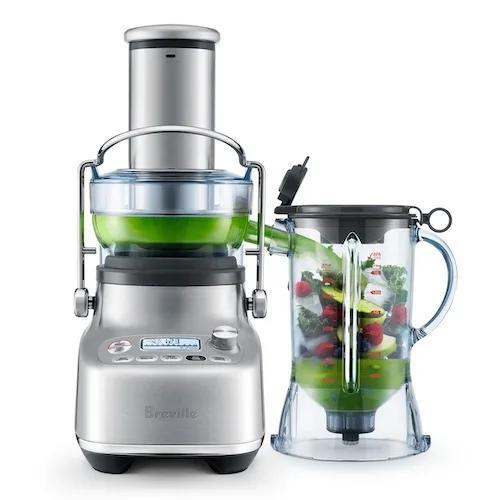
Image: Supplied/Finder
Pros
- Versatile functions
- Easy to clean
Cons
- Noisy
- Not the cheapest
Buy now
The Breville the 3X Bluicer Pro BJB815BSS ranks as the best overall juicer on the market, scoring 4.65 out of 5 stars on Appliances Online and Myer. It boasts four one-touch programs for optimised time and speed settings that yield the most flavorful results, making it a top choice among juice enthusiasts.
This model also has five speed settings and compatibility with the VAC Q, enhancing its versatility and operational ease. Its cold spin technology sets it apart, allowing the juice to flow through a stainless steel cutting disc, resulting in a minimal temperature increase.
Moreover, its large 88mm feed chute enables it to extract 1.5L of nutrient-rich juice up to 5x faster than a 'cold press' machine. The design also focuses on space efficiency, with a single base for interchangeable actions, a pulp bin behind the device, and a large 1.5-litre BPA-free jug.
However, the 3X Bluicer Pro does have a couple of downsides. It tends to be a bit noisy when in operation, which could be a concern for those preferring a quieter kitchen environment. Additionally, it's pricier, so it might not be the most cost-effective option for budget-conscious consumers.
24% off Breville the 3X Bluicer Pro BJB815BSS
Black+Decker BXCJ350E Electric Juicer
Best cheap juicer

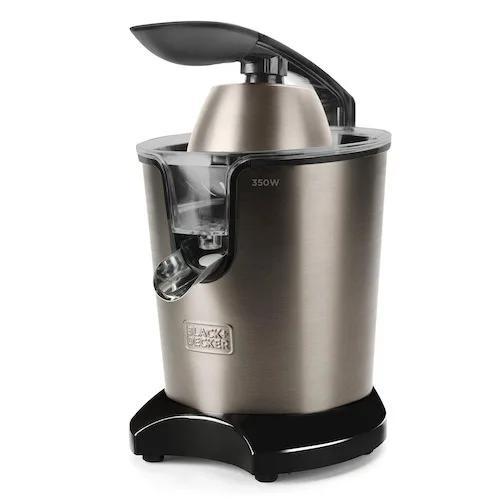
Image: Supplied/Finder
Pros
- Easy to clean
- Durable
Cons
- Bulky
- Automatic start function is too sensitive
Buy now
The Black+Decker BXCJ350E Electric Juicer is our pick for the best affordable juicer, boasting a stellar 4.4-star rating from over 1,000 Amazon reviews. It's appreciated for its powerful 350W motor, professional squeezing ability, and the convenience of dishwasher-safe components.
The lever design, which significantly increases the pressure applied to the fruit, along with the juicer's soft-touch handle and stabilising suction cups, make it an efficient and clean option for juicing any citrus fruit. The thoughtful inclusion of two differently-sized attachments further enhances its versatility. It also features a two-system spout, allowing users to pour juice directly into a glass or collect it in a 650ml container.
But this does come with a few cons. The BXCJ350E is relatively large, which might not fit smaller kitchens best. In addition, the automatic start mechanism can sometimes be too sensitive, starting the juicer when the fruit is just being positioned.
Breville BJE410CRO the Juice Fountain Max Juicer
Best fast (centrifugal) juicer

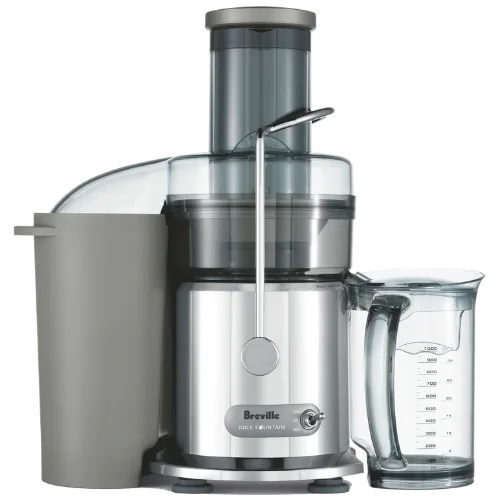
Image: Supplied/Finder
Pros
- User-friendly
- Extra-wide chute
Cons
- Some components feel flimsy
- Not entirely “mess-free” according to users
Buy now
The Breville BJE410CRO the Juice Fountain Max Juicer is an exceptional fast juicer that has won the hearts of many.
Earning a splendid rating of 4.5 out of 5 stars on Appliances Online, it stands out with its prowess in juice extraction and user-friendly features. Its extra-wide chute feed of 84mm and 1L juice jug capacity make the juicing process a breeze. Moreover, its unique stainless steel micro mesh juicing filter goes above and beyond by extracting up to 20% more vitamins and minerals than other juicers.
It's worth mentioning two minor drawbacks: the plastic pulp and juice collection baskets can feel a bit flimsy and may not be as durable as the rest of the juicer, and some users have found the mess-free juice nozzle to be less 'mess-free' than advertised. However, these cons don't take away from this juicer's overall performance and value.
Hurom H100 Cold Press Juicer
Best cold-press juicer

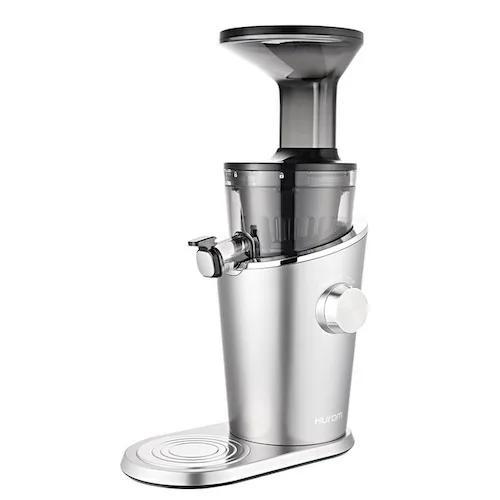
Image: Supplied/Finder
Pros
- Easy to clean
- No pre-chopping required
Cons
- Noisy
- Not cheap
Buy now
We recommend the Hurom H100 Cold Press Juicer as the best cold press juicer. Rated at a remarkable 4.9 out of 5 stars on Myer, the overall consensus is that this is a high-quality juicer worth its weight in gold (and fruits!).
The H100's Mega Hopper system allows for effortless use - there's no need for extensive chopping or preparation. Simply insert your fruits or veggies, and watch as its innovative Trimming Wing function handles the rest, reducing your prep time, especially during those hectic mornings.
Cleaning the H100 is also a breeze, thanks to its user-friendly design. The 7-degree tilted chamber is a stroke of genius. This modest tilt ensures every droplet of your freshly pressed juice makes its way from the juicer chamber right into your cup, leaving no room for waste. There is also a pulp container for easy disposal.
However, it's only fair to mention a couple of drawbacks. For one, the H100 comes with a hefty price tag of $699, a fact that might cause potential buyers to think twice. Furthermore, some users have noted that it operates at a slightly higher noise level than expected. Despite these issues, the H100 is still worth considering as it remains a popular favourite among customers.
Nutribullet Slow Juicer
Best juicer for greens

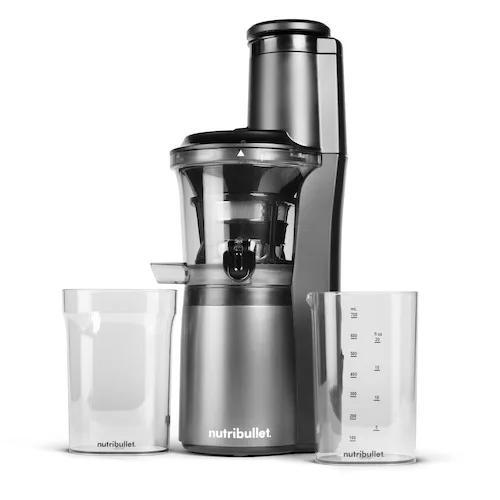
Image: Supplied/Finder
Pros
- Compact design
- No-drip spout for a mess-free juicing experience
Cons
- Chute is smaller than other models
- Capacity may be too small for making large batches of juice
Buy now
The NutriBullet SlowJuicer is our pick for the best option for juicing greens. Despite its compact size, this juicer relentlessly wrings out every precious drop from your favourite fruits and veggies, ensuring no nutrient is left behind. It's even garnering a solid rating of 4.3 out of 5 stars on Amazon and Myer.
It features a large 3-inch feed chute, a high-torque, low-speed motor, and a durable steel-tipped auger that together provide maximum juice yield. Plus, thanks to its no-drip spout, you don't have to worry about spills, which keeps your concoctions mixed until you're ready to transfer them into a glass. And you won't have to worry about noise either since the low and slow approach is incredibly quiet.
However, this compact juicer may be too small for the serious juicing enthusiast who needs to process larger quantities of produce. The default chute is also quite small, meaning you need to cut up your produce into small pieces before you can juice them.
Oscar Neo Plus DA-1200 Ultem Tough Juicer
Best juicer for oranges

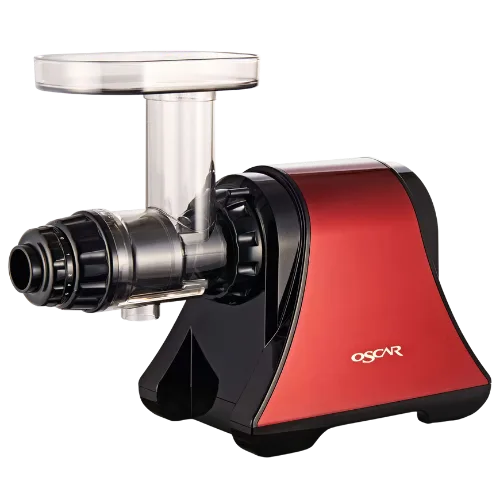
Image: Supplied/Finder
Pros
- Sleek design
- BPA-free and durable
Cons
- Expensive
- Not beginner-friendly
Buy now
The Oscar Neo Plus DA 1200 Ultem Tough Juicer is a top contender for the best juicer for oranges. With an impressive rating of 4.9 out of 5 stars on Appliances Online, it's clear that this juicer has left a trail of satisfied customers.
The BPA-FREE Ultem Tough polycarbonate, single-phase induction motor, and horizontal juicing feature ensure robust and efficient performance. The pulp adjustment nozzle, easy cleaning accessories, and large pasta attachments make it a breeze to use. At the same time, the sleek European design is a visual treat. The ability to handle everything from frozen fruits to wheatgrass and even make your own peanut butter mixes really sets it apart.
But with the high-end features comes a high-end price tag – at $599, it's not the most affordable option. Besides, despite the easy-to-use features, it might still require some learning curve for beginners. Nevertheless, this juicer is undoubtedly a worthwhile investment for any kitchen if the budget allows.
Breville the Big Squeeze Juicer
Best juicer for celery

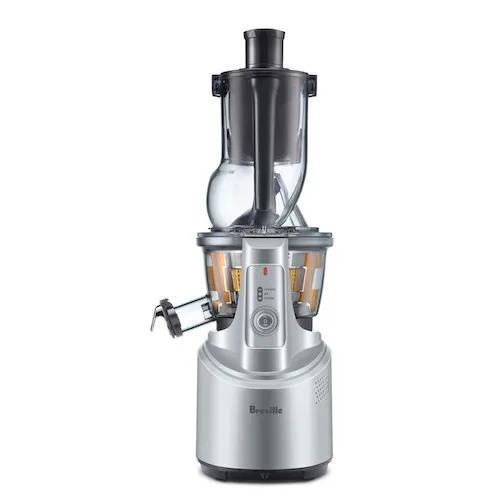
Image: Supplied/Finder
Pros
- Pre-mixing function for a richer taste
- Easy to unclog ingredients
Cons
- Noisy
- Pricey even for a high-end juicer
Buy now
With a rating of 4.2 out of 5 stars on Appliances Online and Myer, we picked the Breville the Big Squeeze Juicer as the best option for juicing celery.
The Big Squeeze Technology works brilliantly, extracting maximum juice and leaving dry pulp behind. The juicer also boasts the largest feed chute on the market, allowing whole foods to be juiced at once, saving time and offering convenience. Plus, the spout plug is an innovative feature that allows for the pre-mixing of juice, leading to a fuller, richer flavour.
The juicer is also designed to keep noise to a minimum with its low-impact 240-watt motor and Quick Rinse Technology. The two-step safety start system provides added peace of mind, ensuring that all pieces are securely locked into place before use. The forward and reverse buttons also make for easy juicing and unclogging of blocked ingredients.
However, excellence comes at a cost. The Breville the Big Squeeze Juicer is a high-end product priced accordingly. It may be considered expensive even among other premium juicers.
Breville the Big Squeeze Juicer at $579
Breville the Citrus Press Pro Juicer
Best citrus press

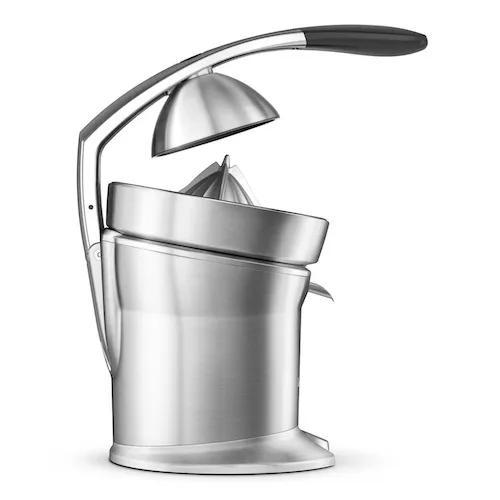
Image: Supplied/Finder
Pros
- Durable and easy to clean
- Suitable for various citrus options
Cons
- Requires more effort than electric juicers
- There are cheaper options in the market
Buy now
The Breville the Citrus Press Pro Juicer has garnered an impressive rating of 4.65 out of 5 stars on both Amazon and Appliances Online, solidifying its status as a top-notch juice press.
It's incredibly user-friendly, featuring a die-cast stainless steel juicing cone that accommodates all citrus fruit sizes and an innovative juicing action for maximum juice extraction. The stainless steel filter, easy-clean design, drip-stop juice spout, and dishwasher-safe parts all testify to its superior functionality. In addition, safety is covered with a soft grip handle, a safety switching system, and integrated cord storage.
It's worth noting that the Citrus Press Pro Juicer, just like most juice presses, requires a bit more effort than some may prefer, and the integrated cord storage could be improved. Despite all these, satisfied customers highly recommend this press as the best one to get.
Kuvings Professional Slow Juicer
Best slow juicer

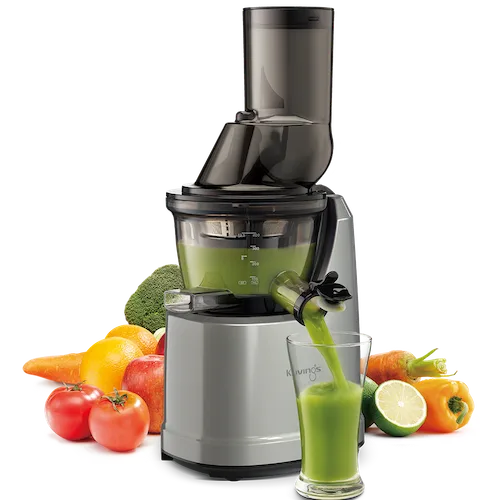
Image: Supplied/Finder
Pros
- 20-year motor warranty
- Professional-grade juicing
Cons
- Heavy
- Not suitable for smaller kitchens
Buy now
The team at Finder has chosen Kuvings' Professional Slow Juicer as the best slow juicer in the market, earning an impressive rating of 4.8 out of 5 stars on Myer.
It's not just a slow juicer; it's a symbol of luxury with a sleek design that makes it a beautiful addition to any kitchen. The juicer operates quietly, living up to its promise of being a 'slow' cold press juicer.
The Maxi-strainer makes juice that's smoother and contains less pulp, perfect for those who prefer finely juiced beverages. Plus, it's effective at juicing green vegetables, which can be challenging for many juicers. The juice yield is maximised thanks to the Kuvings whole slow juicer technology, ensuring freshness and minimal nutrient loss.
The top set has been upgraded for increased durability, and the 3-in-1 Smart Cap has been improved for cleaner juicing, juice blending, and easy rinsing. It also comes with a 20-year warranty on the motor and 5 years on parts for domestic use. But it must be noted that this juicer comes with a relatively high price tag and may take up tons of precious counter space.
Save on juicers with these deals and discounts:
How did we pick this list?


Why you can trust our picks
For this list, we looked into hundreds of press juicers listed in various online retailers like Amazon, Appliances Online, and Myer. We evaluated models from the following brands:
- BioChef
- Black+Decker
- Breville
- Cuisinart
- Greenstar
- Hurom
- Kambrook
- KitchenAid
- Kogan
- Kuvings
- Mod
- Nutribullet
- Omega Juicers
- Optimum
- Oscar
- Russell Hobbs
- Smeg
- Sunbeam
- Torus
- Trent & Steel
We narrowed down our choices based on customer ratings and reviews (as of September 2023). We also considered each model's key product features, including value for money, ease of use, blade quality, and cleanability. We then came up with what we believe are the 9 best juicers available online.
How to compare juicers
Before buying a juicer, you'll need to consider the size of the appliance, how easy it is to use and clean, and how much it costs. Make sure you take the following factors into account:
Controls
Check whether the controls are well laid out and simple to understand as well as if there's an LCD display for extra convenience.
Juicer parts
- Chute. The chute size determines whether you can insert whole pieces of fruit straight into the juicer or whether you'll have to take the time to cut them up into smaller segments.
- Pulp container. Check the size of the pulp container. The larger it is, the less likely you are to have to stop the machine while juicing to empty it out.
- Jug. Many models come with one or two juice jugs. A 1L jug should be enough to hold juice processed from 1kg of produce. If you choose a model that doesn't include a jug, make sure there's sufficient room under the spout to place your own container.
- Attachments. Many juicers come with attachments to help you produce other homemade treats including smoothies, sorbets, purees and ice creams.
Size
Cleaning
As a general rule, cold-press juicers come with multiple parts that you can't place in the dishwasher. However, some models do feature self-cleaning systems to help take the hassle out of the process.
Safety
Warranty
If you're looking for an easy way to include more fruit and veggies in your diet, a juicer can help. There's a wide variety of products to choose from and an even broader price range – anywhere from $60 to $1,000 or more for commercial-scale models – so you'll need to compare different juicers and their features to find the one that's right for your needs.
What is a juicer?
A juicer is a kitchen appliance designed to extract the liquid from fruits and vegetables. It separates the pulp from the liquid to create smooth and (hopefully) delicious-tasting juice.
Juicers shouldn't be confused with blenders, which process the whole fruit or vegetable and produce thicker drinks, such as smoothies. If you want to buy a blender, check out our guide to the best blenders.
Do you really need a juicer?
If you're tossing up whether to buy a juicer, the key factor to consider is how often you will use it. Waking up to a glass of fresh juice every day sounds inviting, but the novelty can quickly wear off.
A juicer can make it easier to squeeze more vitamins, minerals and nutrients into your body – and without any of the additives or sweeteners found in some store-bought juices. Juicers can also be fun, allowing you to try new fruit and vegetable combinations. If you regularly have leftover fruits or vegetables when you cook, you can cut down on waste and throw them in your juicer.
However, using a juicer takes time and effort, including peeling and chopping fruit and cleaning the juicer after every use. They're also not as versatile as a blender or a food processor with a juicer attachment.
What types of juicer are available?
There are two types of juicers to choose from:
- Centrifugal juicers. Centrifugal juicers (sometimes called juice extractors) work by feeding produce through a spinning blade and relying on centrifugal force to separate the juice from the pulp. They're quick and easy to use, producing juice in well under a minute.
- Cold-press juicers. Also known as masticating or slow juicers, these models usually produce better-quality juice than centrifugal juicers and can extract more liquid from your fruit and vegetables. Cold-press juicers operate at much lower speeds than their counterparts and gently compress and crush fruit and vegetables to extract the juice within.
- More affordable
- Quick and easy to use
- Often easier to clean
- Noisier
- Bulkier
- Can produce frothy juice
- Juice stays fresh for longer
- Better-quality juice
- Quieter
- More expensive
- Slower juicing time of around 5 to 6 minutes
- Produce usually needs to be chopped into smaller pieces to fit into the machine
Compare juicers
Fetching your data...
Fetching your data...

Fetching your data...

Fetching your data...

Fetching your data...
Frequently Asked Questions
What is the best juicer?
We picked the Breville the 3X Bluicer Pro BJB815BSS as the best juicer you can get online.
What's the difference between a juicer and a cold press juicer?
The main difference between a juicer and a cold press juicer is how they extract juice from fruits and vegetables. Traditional juicers use blades to quickly cut up ingredients into tiny pieces. In contrast, cold press juicers slowly crush ingredients utilising an auger.
Does juicing have any downsides?
Juicing can be a great way to get more fruits and vegetables into your diet, but it does have some downsides. Juicing removes most of the fibre from the ingredients, so you don't get all the nutritional benefits of eating whole fruits and vegetables. Additionally, juicers can be expensive and time-consuming to use.
Is it worth buying a cold press juicer?
A cold press juicer is worth considering if you want to get the most nutrients from your produce. Cold press juicers are quieter and can extract more nutrients from fruits and vegetables than traditional juicers.
Is it better to juice in a blender or juicer?
This depends on what you're trying to achieve. If you're looking for a drinkable juice, then using a juicer is the best choice as it will give you a more concentrated result. On the other hand, if you're looking for something thicker, like a smoothie or puree, it may be better to use a blender.
How many years should a juicer last?
The life expectancy of a juicer will depend on how often it's used and the quality of the product. Some high-end models can last up to 10 years, while cheaper models may only last around five years.
How long does juice from a juicer last?
The shelf life of juice from a juicer will depend on the ingredients used and how it's stored. If you plan to keep your juice for over a few days, it's best to store it in an airtight container in the fridge. This should help preserve the taste and nutritional value of the juice for up to five days.
What is the difference between a juicer and a blender?
A juicer separates the juice of your favourite fruits or veggies from their fibre and pulp. This tool typically uses a large amount of ingredients to produce a decent volume. A blender uses rotating blades to combine fruits, veggies and other ingredients, creating thick liquids. It doesn't remove the fibre or pulp.
What food items should you never put in a juicer?
Not all ingredients can be processed by a juicer. Here are some food items you shouldn't put in this handy kitchen appliance:
- Whole apples
- Avocado
- Coconut
- Pears
- Bananas
- Kale
- Broccoli
- Figs
- Ice
Do you need water for juicing?
You don't need to add water when using a juicer as it doesn't really add any nutritional value to your juice.
How do you clean a juicer?
You should always clean your juicer after every use. To start, unplug your juicer and disassemble it. Empty your pulp container and wash the removable components. Using a mix of hot water and dishwashing soap, let the parts soak for about 5 minutes. Then, clean your juicer base using a damp cloth. Once all the components are dry, reassemble your appliance.
Best rated juicer brand Finder award breakdown
2020 Best Rated Juicer Brand


2019 Best Rated Juicer Brand
*Brand did not meet the sample threshold to qualify for the award


Why you can trust Finder Shopping best guides


We're knowledgeable


We're comprehensive

